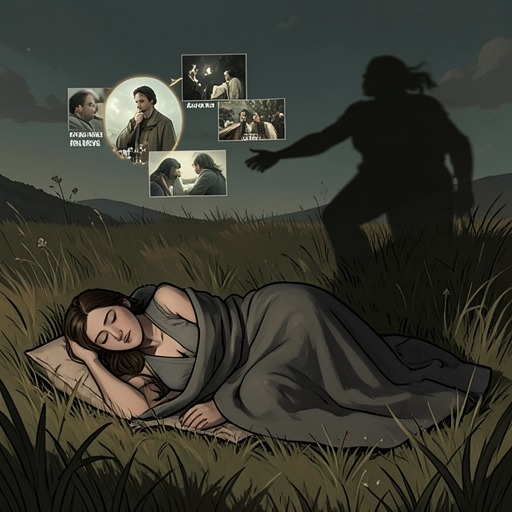
Photographie de Dolores Preciado
Pedro PáramoPhotographie de Dolores Preciado is the sole image Juan Preciado has of his mother, Dolores Preciado, and a keepsake he carries toward his hoped-for meeting with Pedro Páramo. Its physical damage and Juan’s bodily response make it more than a likeness: it is an intimate, imperfect trace of the mother whose recognition he carries with him as a hope.
Discovery and Material Condition
Juan found the old photograph in the kitchen buffet, at the bottom of a pot filled with herbs: lemon balm leaves, rose petals, and sprigs of rue. He had never seen another image of Dolores. She had always been reluctant to be photographed and regarded photographs as sorcery, a suspicion that seems to gain force from the condition of this particular portrait.
The photograph is worn at the edges and riddled with pinprick-like holes. One puncture, on the side corresponding to the heart, is large enough for a finger to pass through. Its damage is concrete and intimate: the image preserves Dolores, but does so in a visibly broken form. The description does not explain how the holes were made, leaving the physical marks—and Dolores’s distrust of photography—to sit together without resolving their significance.
A Keepsake Carried Toward Recognition
After finding it, Juan kept the photograph. As he travels, it rests in his shirt pocket; he feels it warm his heart, as if Dolores herself were sweating. The portrait thus links a small, tangible object to a bodily sensation and to the remembered presence of his mother. That closeness is Juan’s experience of carrying it, not evidence that the photograph can speak or act on its own.
Juan brought the image because he thought it might work in his favor when the time came for his father to recognize him. The hope gives the photograph a practical purpose as well as an emotional one: it is meant to assist recognition between a son and the father he is seeking. Yet the account establishes only Juan’s expectation. It does not say that he shows the portrait to Pedro Páramo or that the photograph secures the recognition he wants.
Significance and Limits
The photograph holds together presence and absence. It is the one surviving image Juan knows of Dolores, but its holes interrupt the likeness; it accompanies him physically, while the warmth he feels is described through his own response. Its damaged surface also resonates with the fragile purpose Juan assigns it: he carries a mother's image in the hope that it can help establish his connection to a father.
Its significance therefore rests not on a confirmed result but on the act of carrying and hoping. Juan preserves the photograph because it is all he has seen of Dolores, and takes it toward Pedro Páramo as a possible aid to recognition. The narrative leaves the portrait's power uncertain, making its worn, perforated material form inseparable from the limits of what Juan can ask it to do.